The Complete Hiragana Chart
All 104 hiragana characters with romaji and pronunciation - tap any character to hear it, then download the free printable PDF to master the script for good.
Tap a character to hear it
The full hiragana chart, organised by sound. Switch between the basic characters, voiced sounds, and combinations to study one group at a time.
Tip: tap any character to hear its pronunciation (works best in Chrome, Edge & Safari).
Free printable hiragana chart (PDF)
Download the full chart as a clean, one-page PDF. Print it, pin it above your desk, or share it with your class - completely free, no email required.
Download the PDF
Learn hiragana that actually sticks
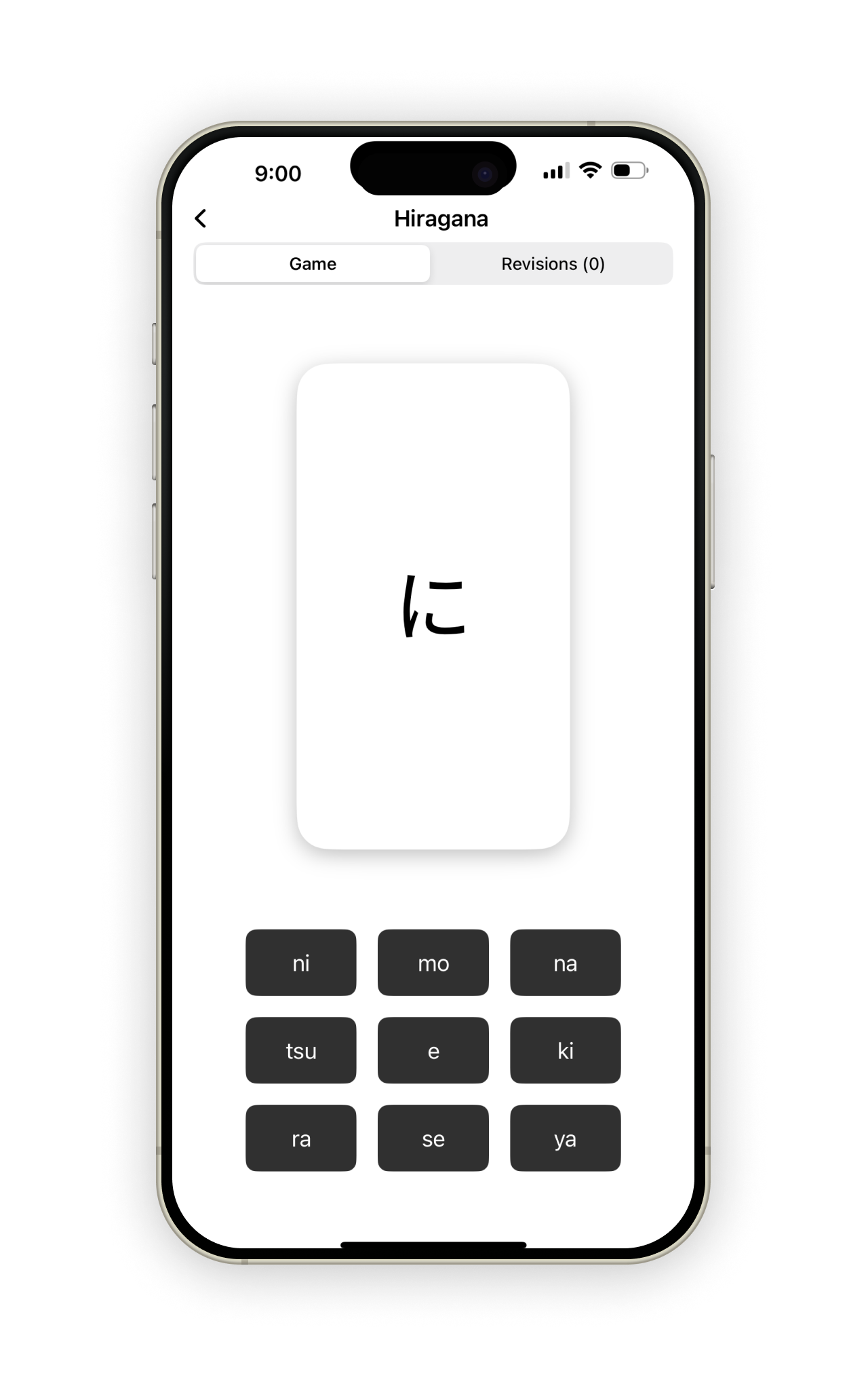
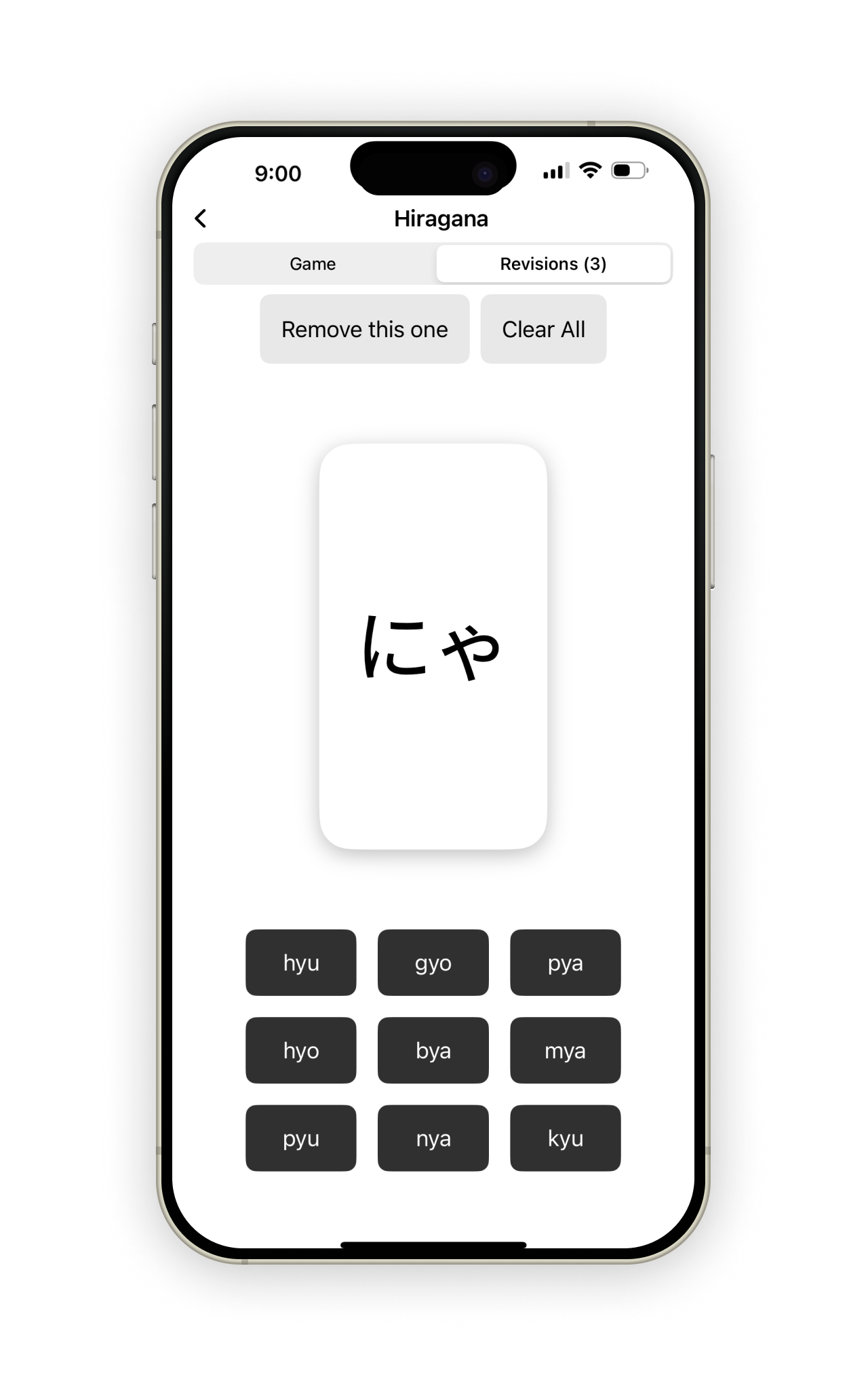
A chart shows you the characters. Kanabloom makes you remember them - with spaced-repetition flashcards that focus on exactly the hiragana you keep getting wrong.
- Dedicated hiragana mode with native audio
- Smart revision that targets your weak characters
- Beautiful, ad-free, and free to start
The 3 things beginners miss
Hiragana is phonetic and consistent, but these details trip up almost everyone early on.
Long vowels
Japanese holds some vowels for an extra beat, and it changes meaning. Hiragana writes them by adding a vowel - usually う after o-sounds and い after e-sounds.
おかあさん = okāsan (mother) · とうきょう = TōkyōThe small っ (sokuon)
A small っ doesn't make a sound - it doubles the next consonant with a short pause. Miss it and the word changes completely.
きて = kite (come) vs きって = kitte (stamp)Particle curveballs
Three hiragana change sound as particles: は is read "wa", へ is read "e", and を is read "o".
わたしは = watashi wa · がっこうへ = gakkou eMaster the tricky lookalikes
A handful of hiragana share a similar shape. Spot the one detail that sets each pair apart.
Same base shape - but ほ has an extra horizontal stroke across the top. は has only one.
れ finishes with a straight upward tail on the right; わ curves into a soft, open loop.
ぬ ends in a small loop; め is the same stroke without the loop.
Near mirror images - さ opens toward the left, ち opens toward the right.