The Complete Katakana Chart
All 104 katakana characters with romaji and pronunciation - tap any character to hear it, then download the free printable PDF to master the script for good.
Tap a character to hear it
The full katakana chart, organised by sound. Switch between the basic characters, voiced sounds, combinations, and the extended katakana used for foreign words.
Used for modern loanwords: フォーク (fork), パーティー (party), カフェ (café), チェック (check).
Tip: tap any character to hear its pronunciation (works best in Chrome, Edge & Safari).
Free printable katakana chart (PDF)
Download the full chart as a clean, one-page PDF. Print it, pin it above your desk, or share it with your class - completely free, no email required.
Download the PDF
Learn katakana that actually sticks
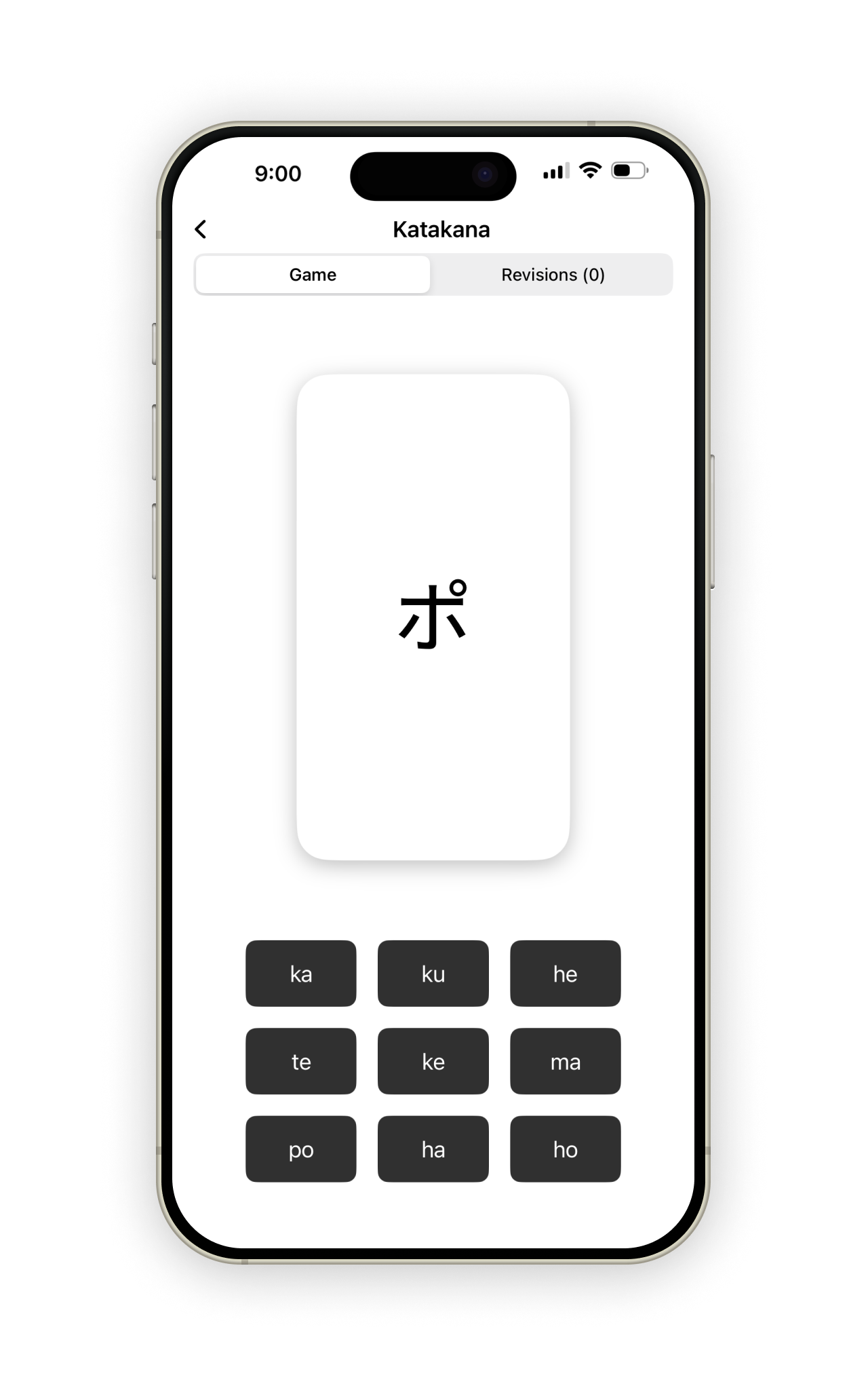
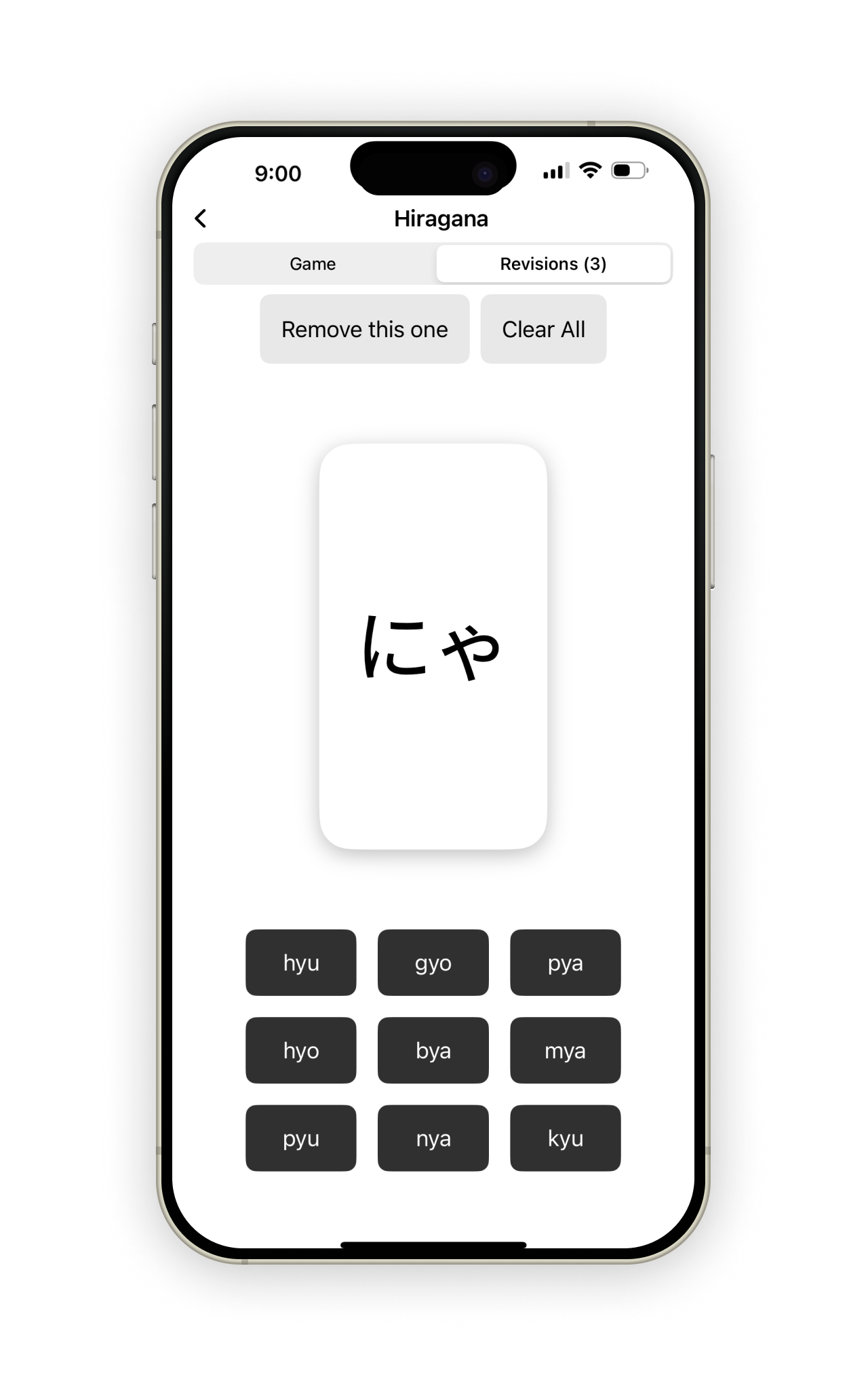
A chart shows you the characters. Kanabloom makes you remember them - with spaced-repetition flashcards that focus on exactly the katakana you keep getting wrong.
- Dedicated katakana mode with native audio
- Smart revision that targets your weak characters
- Beautiful, ad-free, and free to start
The 3 things beginners miss
Katakana looks simple, but these are the details that separate reading fluently from guessing.
The long vowel mark (ー)
Unique to katakana, this line stretches the vowel before it for an extra beat. Miss it and words fall apart.
コーヒー = kōhī (coffee) · ラーメン = rāmenExtended katakana
Modern loanwords need sounds the old chart never had, spelled with small vowels like ファ (fa) and チェ (che).
カフェ = café · パーティー = partyLookalike characters
A few pairs trip up everyone. The trick is stroke direction - see the pairs below.
シ / ツ · ン / ソMaster the tricky lookalikes
The golden rule: シ (shi) and ン (n) sweep upward; ツ (tsu) and ソ (so) come downward.
シ has near-horizontal dots and a stroke sweeping up from the bottom. ツ has side-by-side dots and a stroke coming down from the top.
Same rule: ン sweeps upward from the bottom-left, ソ drops down from the top. Write them in stroke order and you'll never confuse them.
ク is a tidy two-stroke corner. ケ adds a short third stroke on the left.
ナ is a clean cross (plus shape). メ is an X with the strokes crossing diagonally.